Data in
Connect to the official Aurelia Cloud dataset (a Snowflake-style warehouse extract we host) and load it into the engine of your choice.
NavAIgate Build Challenge 01
Build the product pattern enterprises pay six figures for: a chat-first analytics engine that turns a raw data warehouse into insights, decks and decisions. Best build wins a Claude Max 20x plan, on us, for one month.
Eight points. All eight working is the bar for a serious entry. Build them in the order that suits your stack — but ship them all.
Connect to the official Aurelia Cloud dataset (a Snowflake-style warehouse extract we host) and load it into the engine of your choice.
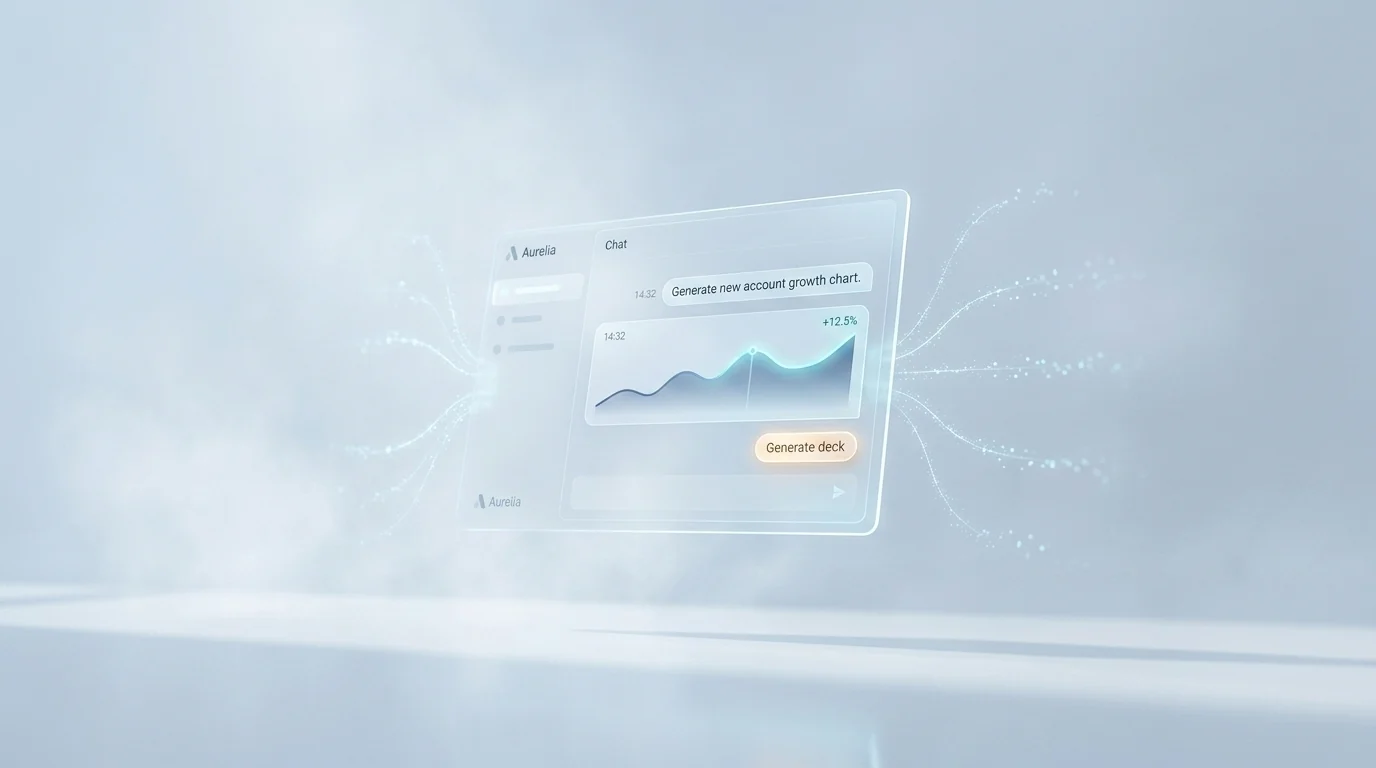
A conversational interface is the primary way users explore the data — ask questions in plain English, get answers grounded in the warehouse.
Generate charts and surface commercial insight — pipeline, churn risk, whitespace, adoption trends. There are real stories hidden in the data; find them.
Produce a presentation from any analysis — an in-browser HTML deck and a downloadable PowerPoint (.pptx), both rendered by your application at runtime. No Claude Code, no coding assistant, no external pipeline doing it off-stage: judges will generate decks live inside your app.
SSO (Google / Microsoft / GitHub) or email auth. Every user sees only their own work.
A space where rendered decks and artefacts live after the conversation — each one linked back to the chat and data that produced it. The app remembers.
Expose an MCP server or a documented API (either) so agents can drive your product, not just humans.
Live deployment on Railway, AWS, Azure, Vercel, Cloudflare — anywhere. Judged as a product, not a prototype.
A fictional B2B design-software SaaS. Eight tables, roughly 620k rows, eighteen months of usage — fully synthetic. There are real commercial stories buried in here. Your engine should find them.
CSVs + SQLite + DDL, zipped.
Every table and column, explained.
The DDL — tables, keys, types.
Starter SQL to get you moving.
Synthetic data only. The Aurelia dataset is fictional — do not enrich it with real company data.
Five sketches, five different readings of the same brief. Yours should look like none of them.




Read these before you start. Entry constitutes acceptance.
Scored against a fixed rubric. Judged personally by Daniel Wright; top entries get a live teardown on Skool.
Built to be worth winning.
Paid by NavAIgate for one month. The serious tier, on us.
Plus a 1:1 architecture session with Daniel.
Three weeks. No extensions.
Entries open.
Questions? Bring them to the next community call — live Q&A on the brief and the dataset.
Deadline. Final submissions in.
Winner announced live on Skool.
Post in the Build Challenge thread in the Skool community. Include everything below.
Or emaildw@navaigate.dev, subject “Build Challenge 01”.
The questions that come up most.
Yes, if all eight spec points work — the MCP/API requirement means you will need some backend.
Yes — encouraged.
You do; see the rules for the licence you grant by entering.
No — Aurelia only, but generic engines impress.
Two, maximum.